
'Investors should reduce cash gradually and look for value investing.'

The failure of SVB was due to idiosyncratic reasons, but shows how higher rates can expose fault lines in unforeseen places, observes Neelkanth Mishra.

With the world's worst outbreak of COVID pandemic stalling a nascent economic recovery, the government has begun assessing the impact of the second wave of infections on different sectors and may look at providing support at an appropriate time to segments requiring fiscal help. Some of the economic indicators, including the Goods and Services Tax (GST) collections, still provide confidence and incoming data will throw some more light on the state of the economy, sources said. Services sectors like hospitality, tourism and aviation which had just started recovering were hit hard by the second wave of COVID, the sources said, adding these segments might need some support on an urgent basis from the government.

The current episode highlights the structural vulnerabilities in the liquidity management practices of Indian NBFIs

The 21st meeting of FSDC comes against the backdrop of the economy hitting a six-year low growth rate of 5 per cent in the first quarter of 2019-20. Even some of the macroeconomic data for the second quarter does not portray an encouraging picture of the economy.
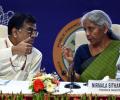
'...Market-linked debentures, high-value insurance, exemptions from capital gains by investment in real estate, etc.' 'So, there are a number of measures directed at collecting a fair share from higher income individuals.'

IMF said the repercussions from India's currency exchange initiative will likely persist through the first quarter of 2017.
The Reserve Bank on Thursday said the macroeconomic risks to the Indian economy have increased over the last six months due to the fall in growth, external sector developments and subdued performance of the corporate sector.

'I urge the government to put aside vendetta politics, and reach out to all sane voices and thinking minds, to steer our economy out of this man-made crisis'

Observing that India's worsening COVID-19 situation and the strict measures to contain it have hit the economy hard, the rating agency said productive capacity has been severely disrupted since the start of the pandemic.

According to a new report by international management consulting firm Arthur D Little, the worst of COVID-19's impact will be felt by India's most vulnerable in terms of job loss, poverty increase and reduced per-capita income, which in turn will result in a steep decline in the Gross Domestic Product (GDP). "Given the continued rise of COVID-19 cases, we believe that a W-shaped recovery is the most likely scenario for India. This implies a GDP contraction of 10.8 per cent in FY 2020-21 and GDP growth of 0.8 per cent in FY 2021-22," the report said.

'India's sizeable foreign exchange reserves should serve as a buffer.'

Lenders had filed 1,251 cases to recover Rs 24,765.5 crore. Wilful defaulters are the entities that do not pay back money despite the ability to do so. Defaulters above Rs 1 crore were considered for this exercise.
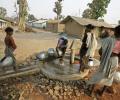
In May, Satpal Singh, who runs a dairy business with three buffaloes in Jewar, near Noida, was worried about the steep spike in input costs. Singh said dry fodder rates, which cost Rs 1,500-2000 per tractor trolley last year, were quoting at Rs 4,500-5,000. The price of other cattle feed ingredients (that include mustard meal and similar mixes) had also gone up from Rs 2,000 per quintal to Rs 3,100-3,200 per quintal.

Despite all of the PM's many strengths, it is increasingly clear that he does not necessarily have a coherent and clear worldview on matters of macro policy.

Buoyed by an increase in public investment and incentives to boost manufacturing, India's economy is expected to grow by 8.3 per cent in the fiscal year 2021-22, less than the previous projection early this year before the country was hit by the second wave of the COVID-19 pandemic, the World Bank has said in its latest report. World Bank chief economist for the South Asia Region Hans Timmer told PTI here that when one looks at the high frequency data, they see that as a result of the second wave of the COVID-19 pandemic, the recovery paused, and some indicate that the recovery actually declined briefly. "We project for this fiscal year 8.3 per cent (growth rate for Indian economy) that is less than we projected early in the year before the health crisis caused by the second wave. "Given the sharp contraction of the economy last year, it might not look like a lot, but in my view, that is actually very positive news, given the violent second wave and the severity of the health crisis," he said on Thursday.

The ongoing key reforms such as sops for manufacturing, easier labour laws, wooing FDI inflows and privatisation will help improve productivity and support long-term growth at 7.5-8 per cent levels, which if played out well, can help India contribute 15 per cent of global GDP growth by FY2026, says a report. According to a report pencilled by the India economist at UBS Securities, Tanvee Gupta Jain, the country has the lowest manufacturing costs among peers, even though China retains significant ecosystem advantages and despite that India and Vietnam appear most likely to benefit from a shift out of China.

These companies, the study said, will have to either dip into its cash balance or borrow in short term.

Moody's Investors Service on Friday said India's economy is expected to contract for the first time in more than four decades saying economic damage owing to the coronavirus-induced lockdown will be significant with lower consumption and sluggish business activity. Even before the coronavirus outbreak, Indian economy already was growing at its slowest pace in six years and with the stimulus measures announced by the government falling short of expectations, the disruptions are likely to be greater. "We now expect India's growth to register a real GDP contraction for the fiscal year ending in March 2021 (fiscal 2020-21), from our earlier projection of zero growth," it said in a research note.

'This encourages escapism through the politics and economics of nationalism, made worse by tribalism or nativism, the package accompanied inevitably by the erosion of institutional bulwarks and therefore State capture by powerful businessmen,' notes T N Ninan.

'The new government will have to contend with slowing economic growth, weak private investment, anaemic exports and vulnerable external imbalances, a stressed financial system, mounting fiscal pressures (including high government debt-to-GDP ratios) and an exceptionally bad employment situation,' says Shankar Acharya, former chief economic adviser to the Government of India.

RBI will make a presentation on January 24 before the panel on the state of NPAs and stressed loans.

'The variables to watch include the monsoon, resolution of NBFC liquidity issues, GST collections, and NPA resolution.'

Chinese leaders may well respond to challenges with heightened rhetoric.

IMF says, India will grow significantly in near-term.

'While growth will bounce back from the current sub-5 per cent, it will stay lower than the already inadequate long-term average of 6.6 per cent,' notes T N Ninan.

Indian companies are in a precarious financial position.

'The impact of economic shocks on the labour markets is usually on the young who delay their entry in response to a fall in job opportunities,' says Mahesh Vyas.

'We believe there will be a full shutdown for four weeks and a partial shutdown for eight weeks.' 'Hence, economic activity is unlikely to normalise before the end of May.'

'India is in a slowdown which most of us have not seen in our living memory.'

The VRS has been mostly offered to cut costs in wake of economic slowdown, the experts said.

There is little sense in trying to find stocks that will not be vulnerable in a situation where 87% of the market is trending down and India is getting set for a crucial election, says Devangshu Datta.
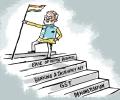
'The expectation was that Modi would become even bolder in his approach, and after only four months into his second term, we are starting to see evidence of this.'

kers likely to pass on additional excise duty burden to consumers; price increase to be 5-10%

In the first eight months of 2019, 70 per cent stocks in the BSE 500 universe were down. These stocks account for 94 per cent of India's total market capitalisation.
The gross NPAs of public sector banks rose to Rs 2.03 lakh crore (Rs 2.03 trillion) at the end of September from Rs 1.55 lakh crore (Rs 1.55 trillion) on 31 March, 2013.

'The news about the new virus strain in the UK provided them with an opportunity to take money off the table.'

Demonetisation will wipe out the likely benefits of a good monsoon this year, says Christopher Wood of CLSA.

HDFC twins, Axis Bank, ICICI Bank and SBI from the financial space gained between 1-2.7%.
China's economy grew 6.7 percent in the second quarter from a year earlier.
